
What problem are you actually solving?
Summary
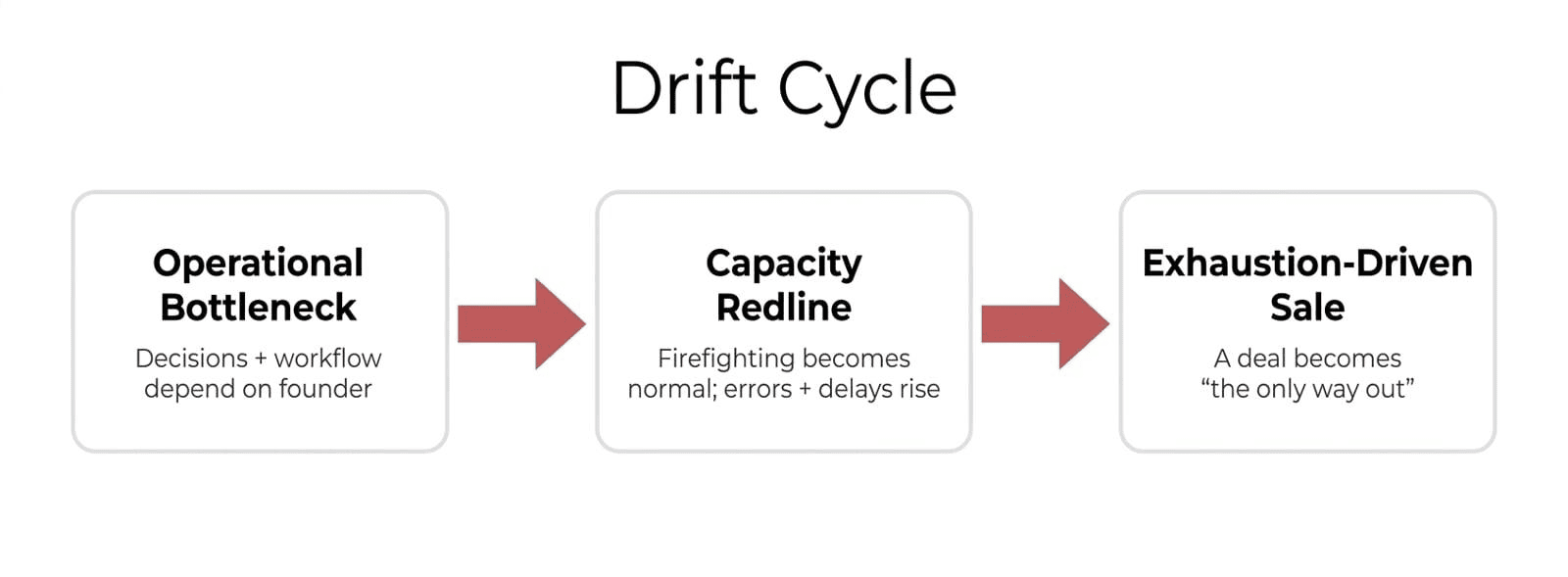
Most advisory firms don’t actively “decide” to sell. They drift into it. Capacity breaks, the owner becomes a permanent operational bottleneck, and the business begins demanding an institutional partner just to survive.
This 1–10 scale is a practical framework designed to name your trade-offs upfront, allowing you to choose the exact level of relief you need—without the exit regret.
Why This Matters: The Architecture of "Drift"
This guide is designed to help RIA principals and leadership teams make clean, objective decisions about relief before an outside buyer forces their hand.
By the time a Letter of Intent (LOI) is on the table, many principals realize too late that they didn’t actually want an exit—they wanted a cleaner inbox, operational breathing room, and fewer decisions trapped inside their head.
In reality, every step toward partnership is an explicit trade. You aren’t choosing a permanent destination; you are choosing what you are willing to give up to get your life back. When leadership teams talk vaguely about “succession,” “delegation,” or “selling,” they treat them as uniform outcomes. In truth, every strategic path is a variable negotiation across five core pillars:
- Control & Decision Rights: Who has the final veto?
- Brand & Client Experience: Is your legacy permanent or absorbed?
- Equity & Upside: How much of the equity pie are you retaining?
- Liquidity & Timeline: How quickly are you taking chips off the table?
- Operational Standards: Are you running on custom preferences or institutional playbooks?
The Myth: "Do It Alone" vs. "Sell to the Highest Bidder"
Most firm owners operate under a stressful, false binary: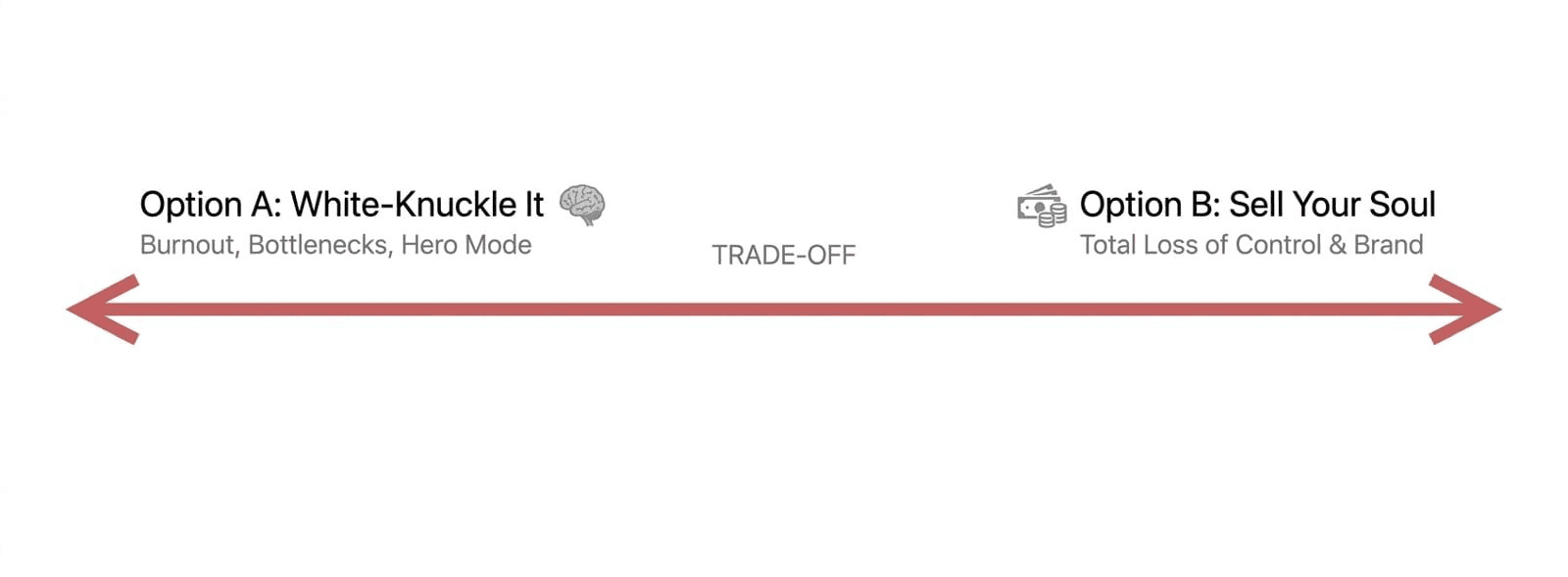
Neither of these paths represents a strategy. They are simply default outcomes that occur when an owner becomes (and remains) the ultimate operational bottleneck.
The cleanest way to pause the cycle of reactionary thinking is to evaluate your firm across the Five Succession Pillars:
Five succession pillars sliders
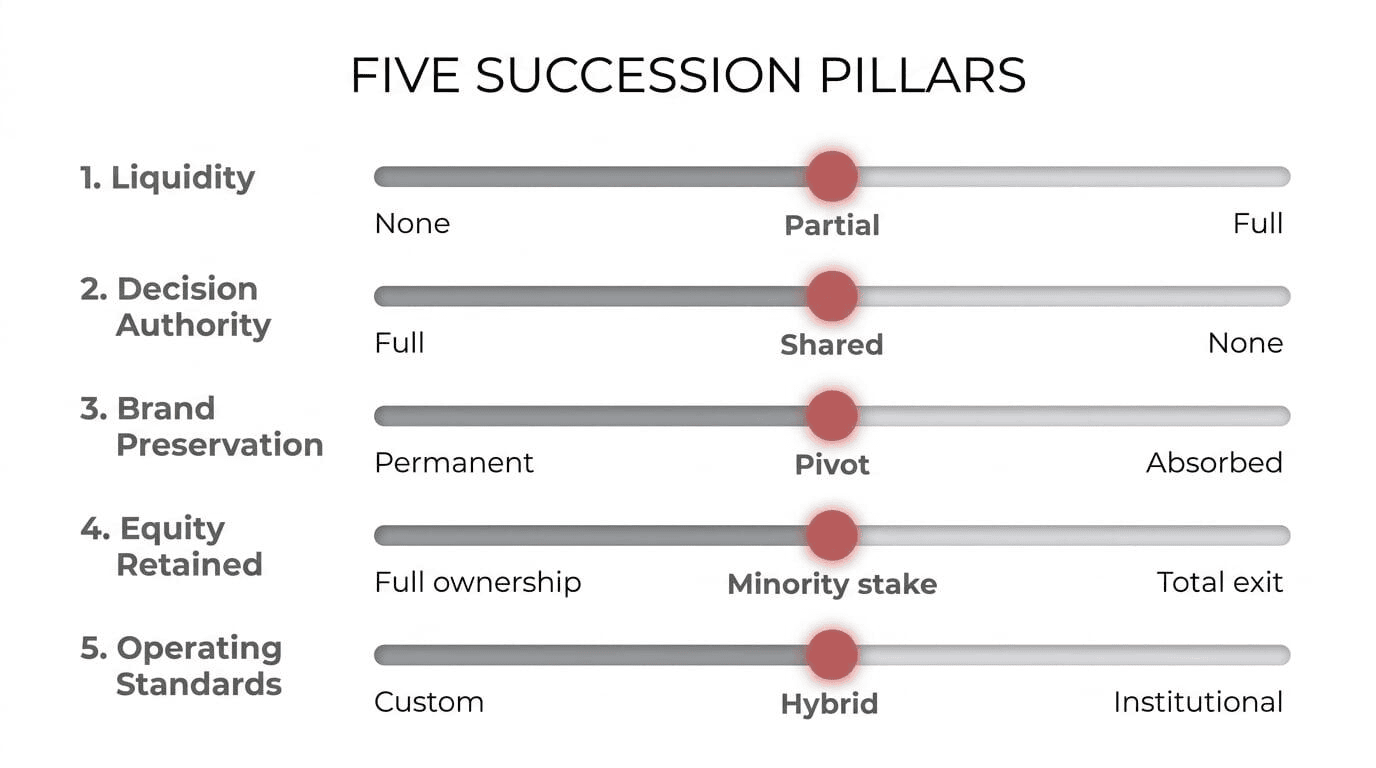
When these sliders stay unnamed, succession conversations stall out. The most expensive succession plan is always the one you execute out of pure exhaustion.
⚠️ Compliance Note: As RIAs scale and explore these infrastructure tiers, data hygiene becomes critical. Under modern regulatory frameworks, "less is more" regarding permanent records. Utilize tools that capture necessary compliance items and run them through human review, but avoid generating superfluous internal communication artifacts that you are legally required to retain.
The 1–10 RIA Succession Scale
Think of external partnership as a ladder. Level 1 represents complete independence with internal delegation, while Level 10 represents a total institutional sale and exit. Levels 2 through 9 are specific rungs designed to trade a targeted amount of autonomy for a predictable type of relief.
Before choosing a rung, you must explicitly identify the form of relief you are trying to buy:
- Time Relief: Offloading low-leverage tasks to clear the calendar.
- Complexity Relief: Handing off the platform layer (tech stack, compliance, HR, operational reporting).
- Decision Relief: Transitioning from solo governance to shared accountability.
- Risk Relief: Mitigating personal regulatory and balance-sheet exposure through institutional oversight.
- Liquidity Relief: Diversifying personal wealth by taking chips off the table.
- Legacy Relief: Ensuring client and team continuity that outlives the founder.
The 6-Point Analysis Rubric
To keep your evaluation objective, every rung on the scale should be analyzed using the exact same criteria:
- What It Solves: The explicit relief delivered.
- What It Costs: The exact trade-off required (capital, control, brand, or flexibility).
- Who It Fits: The ideal profile of the firm owner.
- Indicators: Operational symptoms showing your firm belongs on this rung.
- The Rubric Score: The positioning of the 5 Succession Pillars.
- Partner Types: The entities that facilitate this specific tier.
The Rungs: What Each Level Buys (and Breaks)
Level 1: Independent + Internal Delegation
Relief at this tier is entirely internal. You maintain 100% of the upside and absolute autonomy, buying back your time strictly through organizational design, clear role definitions, and structured internal delegation.
- What It Solves: Absolute autonomy; clear internal career paths for next-gen (G2) talent; maximized long-term equity value.
- What It Costs: The principal remains the ultimate operational anchor and functional bottleneck; personal burnout risk remains high.
- Best-Fit Indicators: You possess a highly capable G2 successor team ready for ownership; you retain high personal energy for daily business management.
- Red Flags: Your calendar is 90% reactive; client review processes and workflows live primarily in your head rather than documented systems.
- The 5 Pillars Rubric:
- Liquidity: None
- Decision Authority: Full
- Brand Preservation: Permanent
- Equity Retained: Full Ownership
- Operating Standards: Custom
- The Data: Industry data from Kitces Research highlights that lead advisors frequently spend only about 20% of their actual week in front of clients when lacking structured internal support systems.
Level 2: Targeted Vendor Outsourcing
This tier represents "relief by subscription." You remain fully independent but stop trying to act as a part-time HR director, head of marketing, or bookkeeper. You buy back hours by outsourcing non-core functions.
- What It Solves: Rapid reduction in low-leverage administrative friction and back-office drudgery.
- What It Costs: Direct hard-dollar monthly retainers; ongoing management overhead required to coordinate external vendors.
- Best-Fit Indicators: Solo or boutique firms (1–3 advisors) requiring specialized operational expertise without the financial overhead of full-time hires.
- Red Flags: "Vendor Sprawl"—managing half a dozen disconnected contractors begins to feel like a demanding second job.
- The 5 Pillars Rubric:
- Liquidity: None
- Decision Authority: Full
- Brand Preservation: Permanent
- Equity Retained: Full Ownership
- Operating Standards: Hybrid
- The Data: Research from Cerulli Associates indicates that advisors who systematically outsource non-core administrative functions save an average of 4.1 hours per week.
Level 3: Outsourced Investment Management (OCIO/TAMP)
This rung removes one of the heaviest ongoing operational drains in an RIA by offloading the Chief Investment Officer function to an Outsourced CIO (OCIO) or Turnkey Asset Management Program (TAMP).
- What It Solves: Portfolio construction fatigue, model drift across accounts, rebalancing bottlenecks, and direct trading/execution risk.
- What It Costs: A portion of basis points on AUM; a required shift in your client value narrative from "market beating portfolio managers" to "holistic financial architects."
- Best-Fit Indicators: You find your team spending greater than 20% of the workweek on investment research and trading; your client conversations are primarily financial planning-centric.
- Red Flags: You continuously second-guess the external partner’s trades or insist on holding legacy, unmanaged "pet" stocks for specific clients.
- The 5 Pillars Rubric:
- Liquidity: None
- Decision Authority: Full
- Brand Preservation: Permanent / Pivot
- Equity Retained: Full Ownership
- Operating Standards: Hybrid
- The Data: Benchmarking data from Morningstar and Fidelity suggests that outsourcing investment management can free up approximately 9 hours per week for client-facing growth activities.
Level 4: Service Bureau Affiliation
Think of this level as "independence with institutional scaffolding." You rent an enterprise-grade back office—including integrated tech stacks, consolidated reporting, and compliance infrastructure—without surrendering a single share of equity.
- What It Solves: Operational fragmentation, legacy tech debt, and the heavy daily administrative burden of serving as Chief Compliance Officer (CCO).
- What It Costs: Fixed platform fees or percentage revenue splits; reduced freedom in software choices; strict adherence to platform guidelines.
- Best-Fit Indicators: Mid-sized firms ($250M to $750M AUM) hitting an operational wall where scaling requires hiring expensive internal operations executives.
- Red Flags: Your internal staff constantly fights the platform's standardized workflows, building manual "workarounds" that actively destroy efficiency.
- The 5 Pillars Rubric:
- Liquidity: None
- Decision Authority: Full / Shared (Internal operational constraints)
- Brand Preservation: Permanent
- Equity Retained: Full Ownership
- Operating Standards: Institutional
- The Data: Schwab’s "Supported Independence" studies show that migrating to a structured service platform reduces compliance operational errors and regulatory flags by up to 40%.
Level 5: Platform Affiliation
The ultimate pivot point on the ladder. You retain your distinct legal brand and equity ownership, but you move your entire firm into a unified, shared ecosystem with institutional resources, deeply integrated technology, and a structured peer network.
- What It Solves: Stagnating organic growth, professional isolation, and long-term platform complexity.
- What It Costs: A permanent, significant revenue split; a complete commitment to operating within an established corporate framework.
- Best-Fit Indicators: Growth-focused principals who want to remain in the CEO/Advisor chair for another 5–10 years but want an institutional operational system behind them.
- Red Flags: Expecting institutional scale while demanding that your legacy team retains the right to process paperwork "the old way."
- The 5 Pillars Rubric:
- Liquidity: None
- Decision Authority: Shared
- Brand Preservation: Permanent / Pivot
- Equity Retained: Full Ownership
- Operating Standards: Institutional
- The Data: Fidelity RIA benchmarking insights demonstrate that firms operating on a fully unified, single institutional platform achieve a 14% higher organic growth rate compared to fragmented peers.
Level 6: Minority Equity Partnership
At this rung, you take personal risk off the table for the first time by selling a minority stake (typically 10% to 30%) of the firm to an institutional investor or aggregator.
- What It Solves: Immediate personal wealth diversification; access to external institutional capital for local M&A; professionalized board governance.
- What It Costs: A direct proportional slice of your firm’s future equity upside; formal accountability to an outside board regarding financial performance and compliance.
- Best-Fit Indicators: Principals with a long runway (10+ years) who wish to monetize a portion of their life's work while retaining clear majority voting control.
- Red Flags: Viewing a minority recapitalization check as an opportunity to "coast" rather than using the capital to aggressively scale.
- The 5 Pillars Rubric:
- Liquidity: Partial
- Decision Authority: Shared
- Brand Preservation: Permanent / Pivot
- Equity Retained: Minority Stake (Surrendered minor slice, retain majority)
- Operating Standards: Institutional
- The Data: Transactions tracked by DeVoe & Company confirm that minority equity sales are a primary vehicle for firms looking to institutionalize operations without surrendering day-to-day control.
Level 7: Majority Recapitalization
A profound strategic pivot point where ultimate corporate control moves to an institutional partner (selling 51% to 70% of the equity). You retain a rolling equity position, but strategic veto rights shift away from you.
- What It Solves: Deep personal liquidity; complete offloading of corporate operational headaches; structured equity pathways for your G2 team.
- What It Costs: Absolute final voting control; eventual brand absorption in most cases; a personal psychological shift from "Independent Founder" to "Corporate Executive."
- Best-Fit Indicators: Exceptional advisors who love client work and organic business development but genuinely dislike the day-to-day burdens of being a corporate operator.
- Red Flags: Experiencing immediate identity shock upon realizing you answer to a board of directors and no longer possess absolute veto power.
- The 5 Pillars Rubric:
- Liquidity: Partial / Full
- Decision Authority: Shared / None
- Brand Preservation: Pivot / Absorbed
- Equity Retained: Minority Stake
- Operating Standards: Institutional
- The Data: Post-transaction research from McKinsey indicates that 30% to 40% of selling principals report experiencing meaningful "decision rights friction" within the first 24 months following a majority recapitalization.
Levels 8–10: The Full Sale & Exit Spectrum
The definitive end of the succession ladder, ranging from a multi-year transition earn-out (Level 8) to a short-term transition contract (Level 9) to an immediate walk-away asset sale (Level 10).
- What It Solves: Maximized immediate liquidity; complete, absolute transfer of business and regulatory risk; a clean break to fund your next act.
- What It Costs: Total surrender of decision authority; complete absorption of your brand legacy; loss of all future business upside.
- Best-Fit Indicators: Owners within 1–2 years of full retirement or those pursuing a complete career change.
- Red Flags: Attempting to maintain informal control or cultural veto power over staff members after the acquisition check has cleared.
- The 5 Pillars Rubric:
- Liquidity: Full
- Decision Authority: None
- Brand Preservation: Absorbed
- Equity Retained: Total Exit
- Operating Standards: Institutional
- The Data: M&A deal analytics from ECHELON Partners and DeVoe & Company consistently emphasize that structural founder dependency is the single largest driver of steep valuation discounts ("haircuts") during a full sale process.
The Three Distinct Roles: Where Mistakes Happen
Succession planning breaks down because owners blend three completely separate roles into a single identity. To choose your correct rung on the ladder, you must evaluate your readiness across all three dimensions independently:
| Role Dimension | What It Entails | The Succession Question |
|---|---|---|
| 1. The Owner/Partner | Equity value, balance-sheet valuation, liquidity, and top-tier governance. | When and how do I want to monetize the value of this asset? |
| 2. The Corporate Leader | Decision rights, daily operational management, tech stack ownership, and team accountability. | Do I actually enjoy running a complex corporate business operations layer? |
| 3. The Client Advisor | Financial planning, relationship management, client trust, and professional identity. | Am I ready to stop managing clients, or is that the only part of this job I love? |
When you separate these roles, you often discover that while you may be 100% ready to give up your role as Corporate Leader (Level 4 or 5), you are 0% ready to surrender your identity as a Client Advisor. Blending them together is what causes owners to mistakenly execute a full exit (Level 10) when they simply needed operational infrastructure.
The Diagnostics: Measuring Your "Drift"
Firms rarely sell because they engineered a perfect, proactive exit plan. They sell because they drifted upward into an emergency deal.
According to data compiled in the ECHELON Partners RIA M&A Deal Report, systemic operational bottlenecks represent a leading catalyst for non-retirement equity transactions. The primary operational indicators that your firm is drifting into a forced transaction include:
- The principal’s calendar is entirely dominated by low-leverage administrative tasks.
- Corporate operating standards live entirely in key employees' heads rather than automated technology workflows.
- Decision rights are undefined; every single operational path winds back to the founder's desk.
- There is no empowered, authorized second-in-command running day-to-day operations.
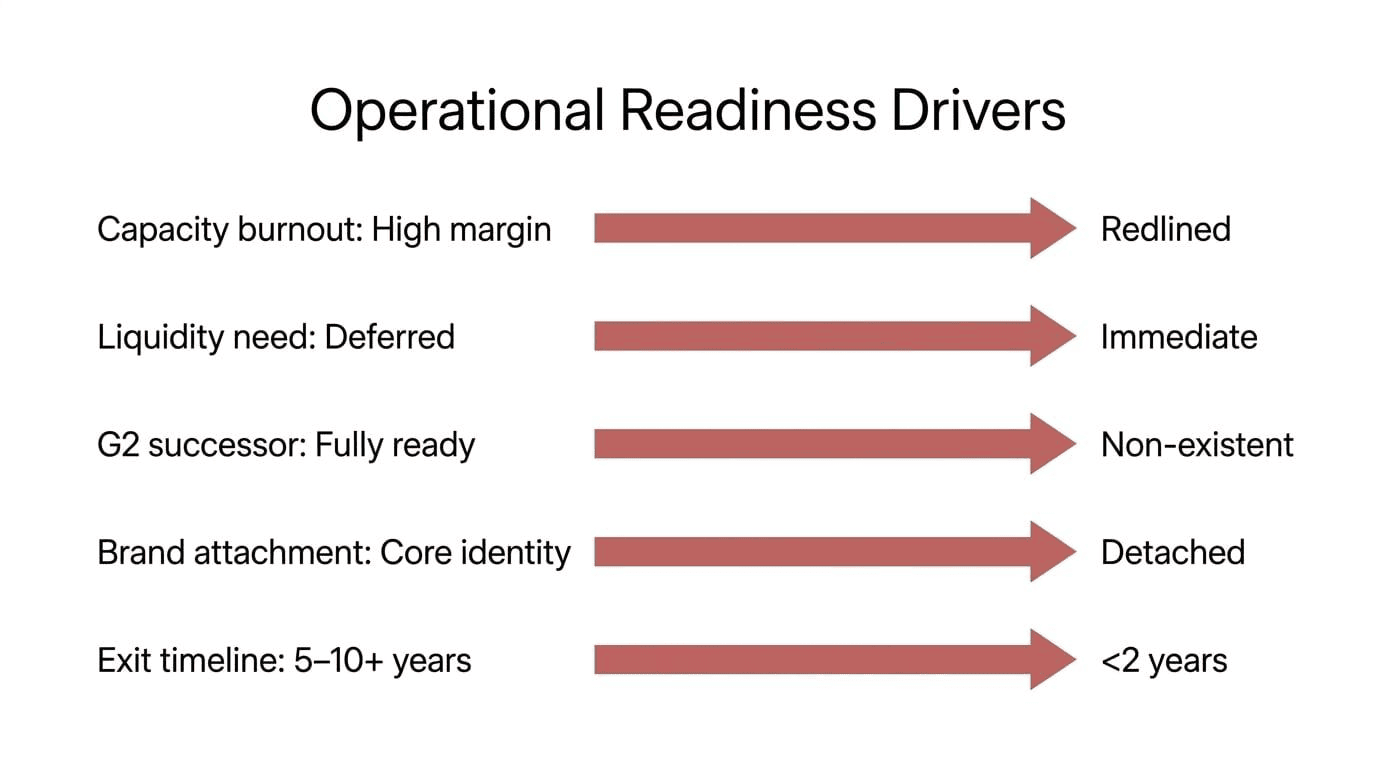
To determine your firm's current structural reality, plot your team across these five critical operational readiness drivers:
Operational readiness drivers:
Action Plan: The "Today vs. 3-Year" Exercise
To convert this framework into an actionable management roadmap, schedule a focused 60-minute strategy session with your leadership team and work through these four explicit steps:
1. Locate Your Metrics
Independently score your firm's position on the 1–10 ladder across two distinct timelines:
- Where are we today? (The actual operational reality)
- Where do we need to be in 3 years? (The targeted strategic destination)
2. Identify the Gap
The numeric variance between those two scores isn’t a vague cultural problem—it is your precise operational project list.
3. Build vs. Buy
If your current reality is a Level 1, but your sanity requires a Level 4 or 5, you have a definitive strategic choice to make:
- Build It: Spend the capital, time, and management energy to construct an institutional back office internally.
- Rent/Sell It: Partner with an established service bureau, platform, or capital provider to immediately install that infrastructure.
4. Answer the Ultimate Trade-Off Question
Conclude your alignment session by answering this single question:
"What are we explicitly willing to trade—and what are we absolutely NOT willing to trade—in order to secure the relief we need?"
The answer to that question will clarify your path forward, ensuring you design a business that scales without executing a transaction you regret.